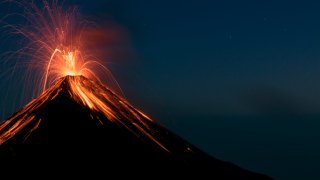
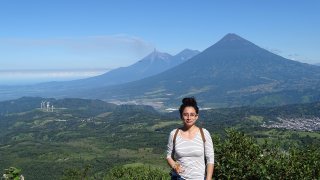
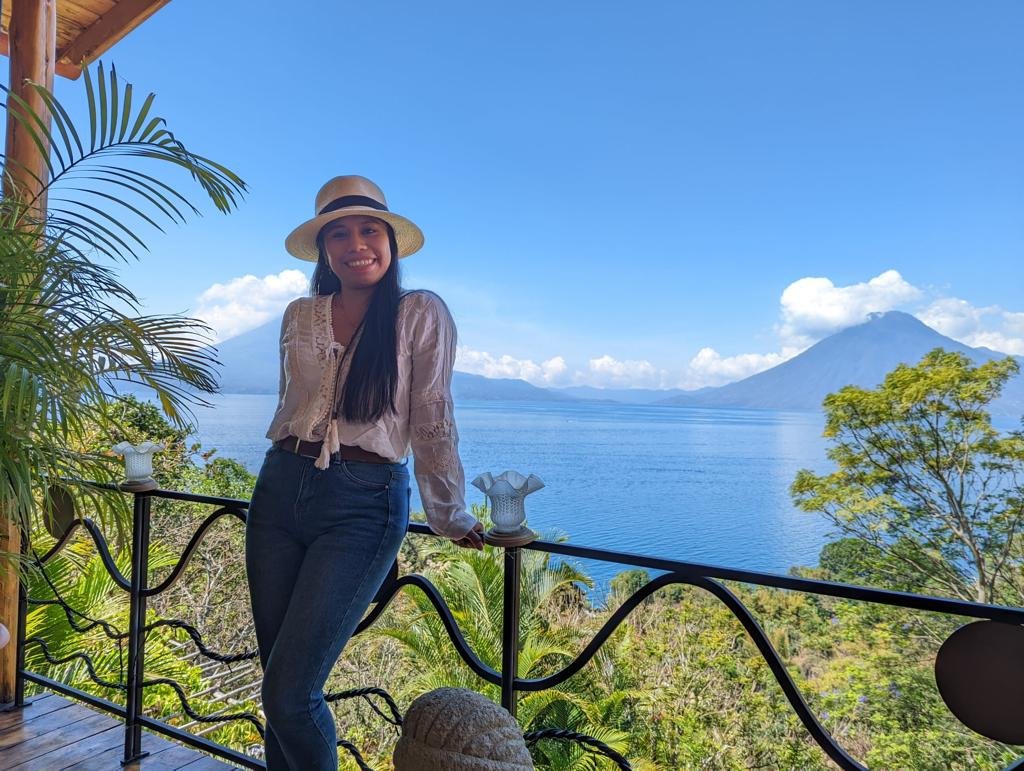
Lake Atitlán is a caldera lake in Guatemala’s western highlands, in the department of Sololá. It sits at 1,562 m and reaches 340 m deep, which makes it the deepest lake in Central America. Three volcanoes rise from its southern shore: San Pedro (3,020 m), Tolimán (3,158 m) and Atitlán (3,537 m). A dozen Tz’utujil and Kaqchikel Maya villages ring the water, linked by public boats from Panajachel. Count on about 3 hours by road from Antigua or Guatemala City, and two to four days on site. The dry season, from November to April, is the best time to visit.


Where is Lake Atitlán and how do you get there?
Lake Atitlán lies in the department of Sololá, roughly 140 km west of Guatemala City, in the Sierra Madre. Panajachel is the main gateway: the road from the Pan-American Highway ends there, and it holds the largest concentration of hotels, restaurants and boat docks.
Most travellers arrive by tourist shuttle or private transfer from Antigua or the capital. Shuttles run daily but stop in several towns; a private transfer is faster and lets you leave early, before the highland fog.
| From | Distance | Driving time | Notes |
|---|---|---|---|
| Antigua | 110 km | 2 h 30 to 3 h | Tourist shuttle or private transfer |
| Guatemala City | 145 km | 3 h to 3 h 30 | Via CA-1 then RN-11 |
| La Aurora airport (GUA) | 150 km | 3 h 30 | Book a transfer on arrival |
| Chichicastenango | 40 km | 1 h 15 | Combine on market days (Thursday, Sunday) |
| Quetzaltenango (Xela) | 55 km | 1 h 30 | Western highlands loop |
From Panajachel, public boats (lanchas) fan out to every lakeside village from the Playa Pública and Tzanjuyú docks. Crossings take 10 to 45 minutes. Boats run through the day, but the last reliable departures are in the late afternoon, and the Xocomil wind makes the water choppier after midday. Cross in the morning for calmer, clearer conditions.

The villages of Lake Atitlán
No single town defines Lake Atitlán. Each village keeps its own trade, language variant and atmosphere, and hopping between them by boat is the point of a stay here.
| Village | Character | Best for |
|---|---|---|
| Panajachel | Gateway town, transport hub, Calle Santander | First night, logistics, shopping |
| Santiago Atitlán | Largest town, Tz’utujil identity, Maximón | Culture, weaving, cofradías |
| San Pedro La Laguna | Lively, Spanish schools, San Pedro volcano trailhead | Budget travel, nightlife, hiking |
| San Marcos La Laguna | Wellness, yoga, Cerro Tzankujil reserve | Retreats, swimming, quiet |
| San Juan La Laguna | Painting and natural-dye weaving cooperatives, coffee | Art, textiles, slow pace |
| Santa Cruz La Laguna | Steep, lakeside hotels, scuba centre | Diving, calm, boat-only access |
| Santa Catarina & San Antonio Palopó | Pottery, textiles, painted houses | Crafts, day trips from Panajachel |
Santiago Atitlán, the largest settlement, holds the strongest Tz’utujil identity, with active cofradías (religious brotherhoods) and the veneration of Maximón, a folk saint moved between households each year. San Juan La Laguna concentrates painting cooperatives and women’s weaving collectives that dye cotton with plants, alongside coffee cooperatives. San Marcos has become the lake’s wellness village, while San Pedro draws a younger, budget crowd and Spanish students.


What to do at Lake Atitlán
The lake works as a base for several days. The core experiences:
- Village-hopping by lancha: the simplest way to read the lake, one dock at a time.
- Climbing San Pedro volcano (3,020 m): a guided half-day hike from San Pedro La Laguna, through coffee plots and cloud forest.
- Sunrise at Rostro Maya (Indian Nose): an early guided walk above San Juan for the classic view over the caldera and its volcanoes.
- Kayaking and paddleboarding, best in the calm early morning.
- San Juan cooperatives: natural-dye weaving, painting and coffee, all within walking distance.
- Markets: the Friday market in Sololá, and a day trip to Chichicastenango on Thursdays and Sundays.
- Cerro Tzankujil nature reserve in San Marcos, with a cliff-jump platform and swimming.
For volcano hikes beyond the lake, including the Acatenango and Fuego trek, see our overview of the volcanoes of Guatemala.
When is the best time to visit Lake Atitlán?
The best time to visit Lake Atitlán is the dry season, from November to April, when skies are clearest and the volcanoes stay visible. Mornings are calm; the Xocomil wind rises around midday.
| Period | Weather | Notes |
|---|---|---|
| November to April | Dry season, clear skies | Best volcano views, calmer mornings, high season |
| May to June | First rains, green landscape | Afternoon showers, fewer visitors |
| July to October | Rainy season, humid | Heavier rain, choppier crossings, lower prices |
At 1,562 m, days are mild (20 to 25°C) and nights cool, dropping to around 10°C in December and January. Bring a warm layer whatever the season. The rainy months turn the slopes green and thin the crowds, at the cost of afternoon downpours and rougher crossings.

How many days do you need, and where to stay?
Two days is the practical minimum: a night in Panajachel and one or two villages by boat. Three to four days let you add a volcano or sunrise hike, the San Juan cooperatives and Santiago Atitlán without rushing the crossings.
Where to stay, by profile: Panajachel for arrival and transport; San Marcos for wellness and swimming; San Pedro for budget and nightlife; San Juan for art and quiet; Santa Cruz or Jaibalito for lakeside calm, reachable only by boat. Splitting nights between two villages gives the fullest sense of the lake.
Lake Atitlán pairs naturally with the rest of the western highlands. Antigua, Chichicastenango and Quetzaltenango are all within easy reach, and most itineraries combine them. See all our regions of Guatemala.
FAQ: Lake Atitlán
Is Lake Atitlán worth visiting?
Yes. It combines a volcanic caldera lake, three volcanoes and a dozen living Maya villages in a compact area reachable in a day from Antigua. Most travellers stay two to four days.
How do you get around Lake Atitlán?
By public boat, called a lancha. Services leave Panajachel through the day and connect the lakeside villages in 10 to 45 minutes. Roads reach only some villages, so the boat is the main transport.
Which village should I stay in at Lake Atitlán?
Panajachel for access, San Marcos for wellness, San Pedro for budget and nightlife, San Juan for art and quiet, Santa Cruz for lakeside calm. Many travellers split their nights between two villages.
Is Lake Atitlán safe?
The lakeside villages are calm and used to visitors. Apply normal precautions: avoid isolated trails alone, take a guide for volcano and sunrise hikes, and cross by boat before the afternoon wind picks up.
Can you swim in Lake Atitlán?
Yes, usually off docks and reserves such as Cerro Tzankujil in San Marcos, where the water sits at 18 to 22°C. Seasonal cyanobacteria blooms can appear after heavy rain, so ask locally before swimming.
How many days do you need at Lake Atitlán?
Two days cover Panajachel and one or two villages. Three to four days add a volcano or sunrise hike, the San Juan cooperatives and Santiago Atitlán.
Is Lake Atitlán a UNESCO World Heritage Site?
No. The lake and its shores form a national park created in 1955, but Atitlán is not on the UNESCO World Heritage list. In Guatemala, that status applies to Tikal, Antigua and Quiriguá.
Last updated: September 2026
About the author
Fernanda Ríos is co-founder of Terra Guatemala, a local travel agency based in Antigua. She has spent years travelling the western highlands and works with Tz’utujil and Kaqchikel communities around Lake Atitlán to build trips that reach beyond Panajachel.
Sources
- INGUAT, Instituto Guatemalteco de Turismo
- INSIVUMEH, volcano monitoring data
- Smithsonian Institution, Global Volcanism Program (volcano elevations)
- CONAP, Consejo Nacional de Áreas Protegidas (Atitlán national park)
- Field observations, Terra Guatemala, 2026