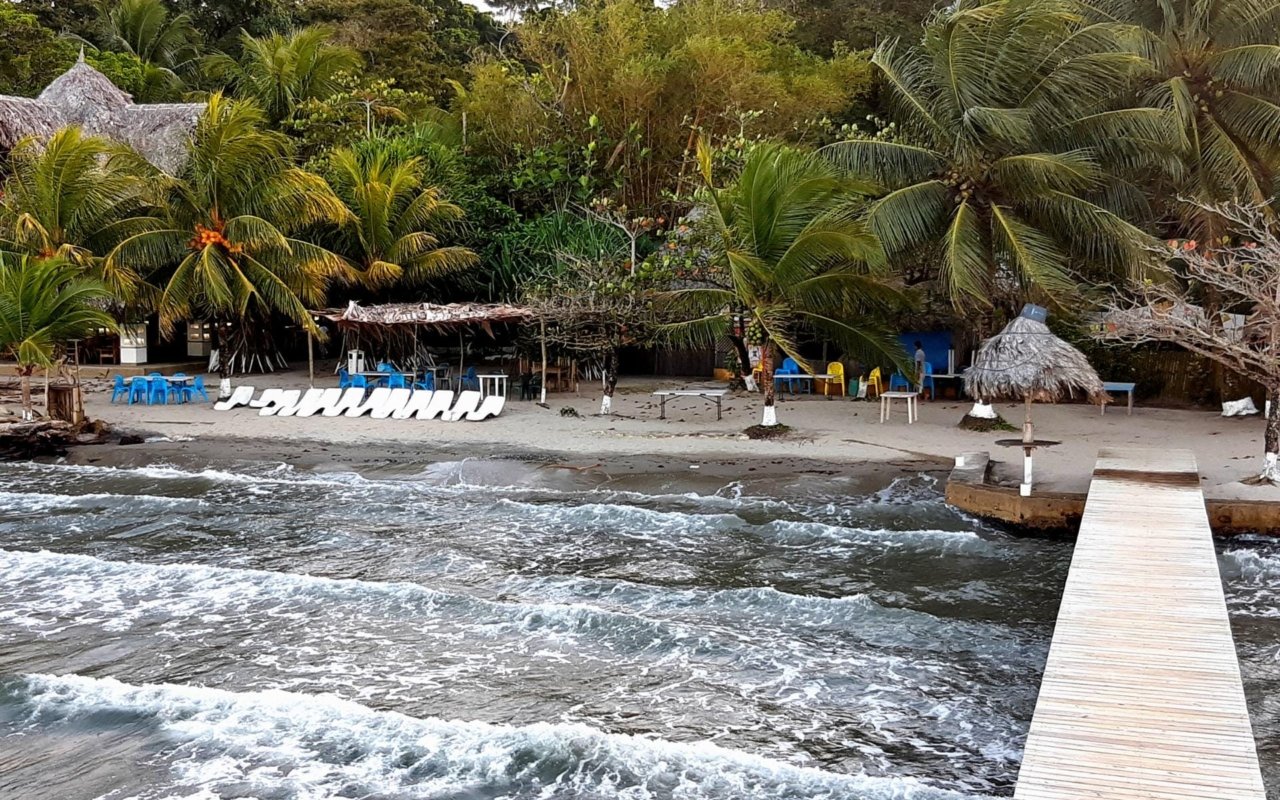
Livingston is a Caribbean town at the mouth of the Rio Dulce, reachable only by boat. It is the heart of Guatemala’s Garífuna culture, an Afro-Indigenous people descended from West Africans and Island Caribs who were exiled from Saint Vincent in 1797 and spread along Central America’s coast. Their language, recognised by UNESCO, their punta drumming and their coconut-and-seafood cooking make the town feel closer to the islands than to the highlands. Most travellers arrive by lancha from Rio Dulce or Puerto Barrios and stay a night or two.

Livingston: Garífuna Guatemala on the Caribbean
Livingston sits where the Rio Dulce meets the Caribbean Sea, cut off from the national road network; the only way in is by boat, and that isolation shaped it. It is the main centre of the Garífuna, and the result feels unlike anywhere else in Guatemala: Spanish mixes with Garífuna and English Creole, the food turns to coconut and seafood, and the rhythm is Caribbean.
The town is named after the American jurist Edward Livingston, whose legal codes influenced 19th-century Central American law. Q’eqchi’ Maya and Ladino communities live here too, making it a layered meeting point of peoples on a coast most visitors never reach.
Who are the Garífuna, and how did they get here?
The Garífuna descend from West Africans who, instead of being enslaved, mixed with the Island Carib and Arawak of Saint Vincent in the Lesser Antilles. After resisting British control, they were deported in 1797 to the island of Roatán, off Honduras, and from there spread west and north along the Caribbean coast of Central America, reaching the shore of what is now Guatemala in the early 1800s.
They brought a distinct language, descended from Arawakan with African and European borrowings, along with their own music, cooking and spiritual practice. UNESCO has recognised Garífuna language, dance and music as part of the world’s intangible cultural heritage. The community marks its arrival each year on Garífuna Settlement Day, 26 November, with drumming and processions.


What to do in and around Livingston
- Garífuna music and food: punta drumming, and tapado, the signature coconut-milk seafood soup with fish, shrimp and crab served in a single bowl.
- Siete Altares: a chain of waterfalls and pools in the forest outside town, best after rain.
- Playa Blanca: the best swimming beach near Livingston, white sand reached by boat.
- The Rio Dulce gorge: most visits combine Livingston with the boat trip up the river.
Experiencing Livingston beyond the day trip
Many arrive on a lunch stop and leave on the afternoon boat, seeing almost nothing. Staying a night changes it:
- Eat tapado where it is cooked for the town, in a family comedor rather than the dock-front cafés, and try hudut or machuca, the plantain-and-coconut dishes behind the tourist menu.
- Hear the drums at their source: ask about a Garífuna drumming or dance evening run by a local cultural group, not a staged hotel show.
- Walk the back streets at dusk, when the town, not the day boats, sets the pace.
- Take the river up to a riverside Q’eqchi’ village to see the other culture sharing this coast.
Where Livingston fits in a trip
Livingston is the cultural counterweight to the highlands: an Afro-Caribbean, coastal Guatemala that surprises travellers who expect only volcanoes and Maya markets. It is the downstream end of the Rio Dulce journey, and the two are almost always done together. It appears in our Caribbean itineraries:
- Wonders of Guatemala: the headline route with the coast.
- Belize and Guatemala honeymoon: links the Caribbean coast to the Belize cayes.
- Nature immersion: for the river and coast.
See all our regions of Guatemala.
How to get to Livingston
There is no road to Livingston; every arrival is by boat, which is part of its character.
| From | Route | Time | Notes |
|---|---|---|---|
| Rio Dulce town | Boat down the river | 45 min to 1 h | The scenic route, through the gorge |
| Puerto Barrios | Boat across the bay | 30 to 40 min | Regular lanchas from the main Caribbean port |
| Guatemala City | Road to Puerto Barrios, then boat | 6 h total | Via the Atlantic highway (CA-9) |
Puerto Barrios also links Livingston by sea to Belize and Honduras.
FAQ: Livingston
How do you get to Livingston, Guatemala?
Only by boat. Lanchas run down the Rio Dulce from Rio Dulce town (about an hour) or across the bay from Puerto Barrios (30 to 40 minutes). No road reaches the town.
Who are the Garífuna?
An Afro-Indigenous people descended from West Africans and Island Caribs exiled from Saint Vincent in 1797. They reached Central America’s coast via Roatán and keep a distinct language, music and cuisine recognised by UNESCO.
What is Livingston known for?
Its Garífuna culture, its setting where the Rio Dulce meets the Caribbean, and dishes such as tapado, a coconut-milk seafood soup. It is reachable only by boat.
What should you eat in Livingston?
Tapado, the signature coconut-milk seafood soup, plus plantain-and-coconut dishes such as hudut and machuca. Seafood and coconut run through Garífuna cooking.
When is Garífuna Settlement Day?
26 November, marking the Garífuna arrival on the coast, celebrated with drumming and processions.
Is Livingston worth visiting?
If you want a Caribbean, Garífuna side of Guatemala unlike the highlands, yes. It pairs with the Rio Dulce boat trip, and a night rather than a day trip is what makes it worthwhile.
Last updated: October 2026
About the author
Tristan Reger is co-founder of Terra Guatemala, a local travel agency based in Antigua. He runs the Caribbean routes and works with Garífuna guides in Livingston.
Sources
- UNESCO (Garífuna language, dance and music)
- INGUAT, Instituto Guatemalteco de Turismo
- Historical record of the Garífuna exile and settlement
- Field observations, Terra Guatemala, 2026