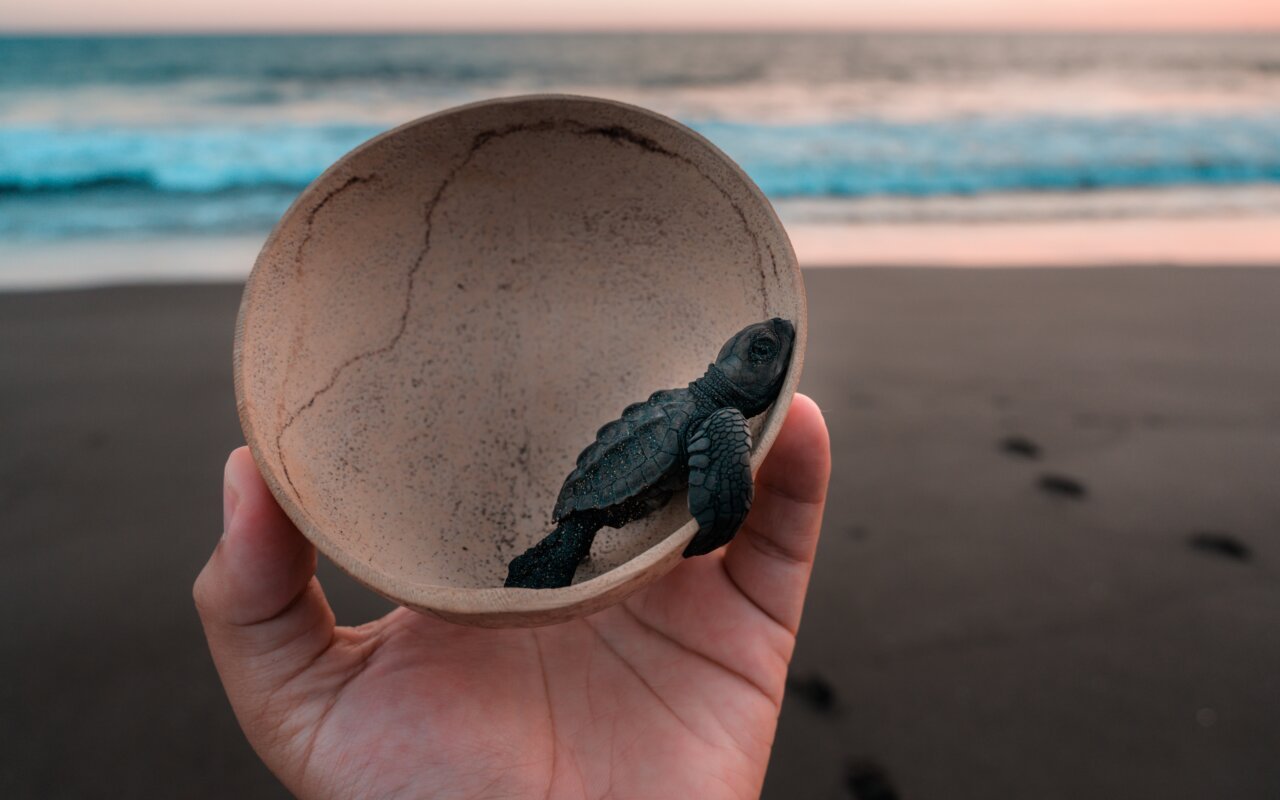
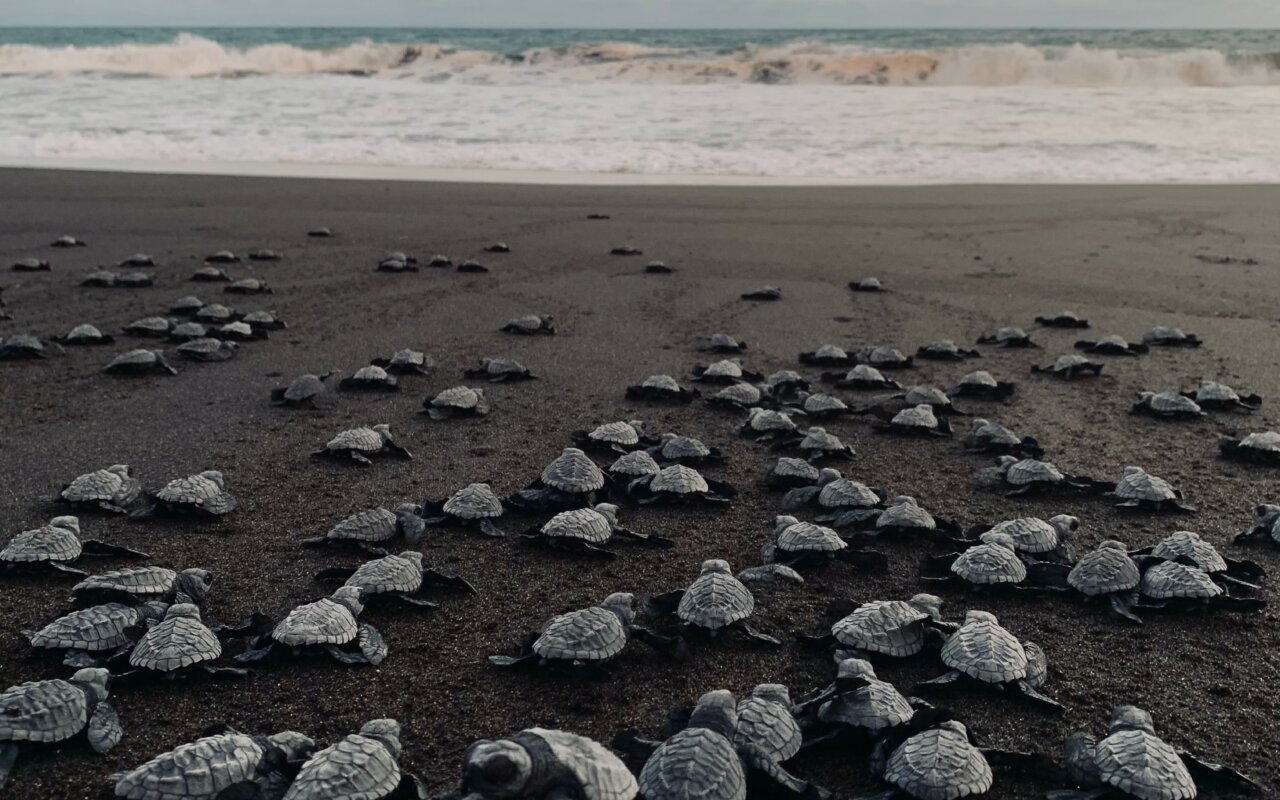
Monterrico is a Pacific-coast village in the department of Santa Rosa, known for its black volcanic sand and its sea turtles. The beach is a nesting ground for several species, and local hatcheries (tortugarios) release hatchlings, often at dusk. Behind it, the Monterrico-Hawaii nature reserve protects mangrove canals rich in birds and caimans. Reached from Antigua or Guatemala City in about three hours, it is the capital’s closest beach, with one firm caveat: the surf has strong, dangerous currents.
Monterrico: black sand and sea turtles
Monterrico lies on Guatemala’s Pacific coast, about three hours south of Antigua. The sand is black and volcanic, washed down from the Sierra Madre and dark enough to burn bare feet at midday; the ocean is warm and powerful, and the pace is low-key. The village sits on a strip between the open Pacific and a system of mangrove lagoons, inside the Monterrico-Hawaii nature reserve.
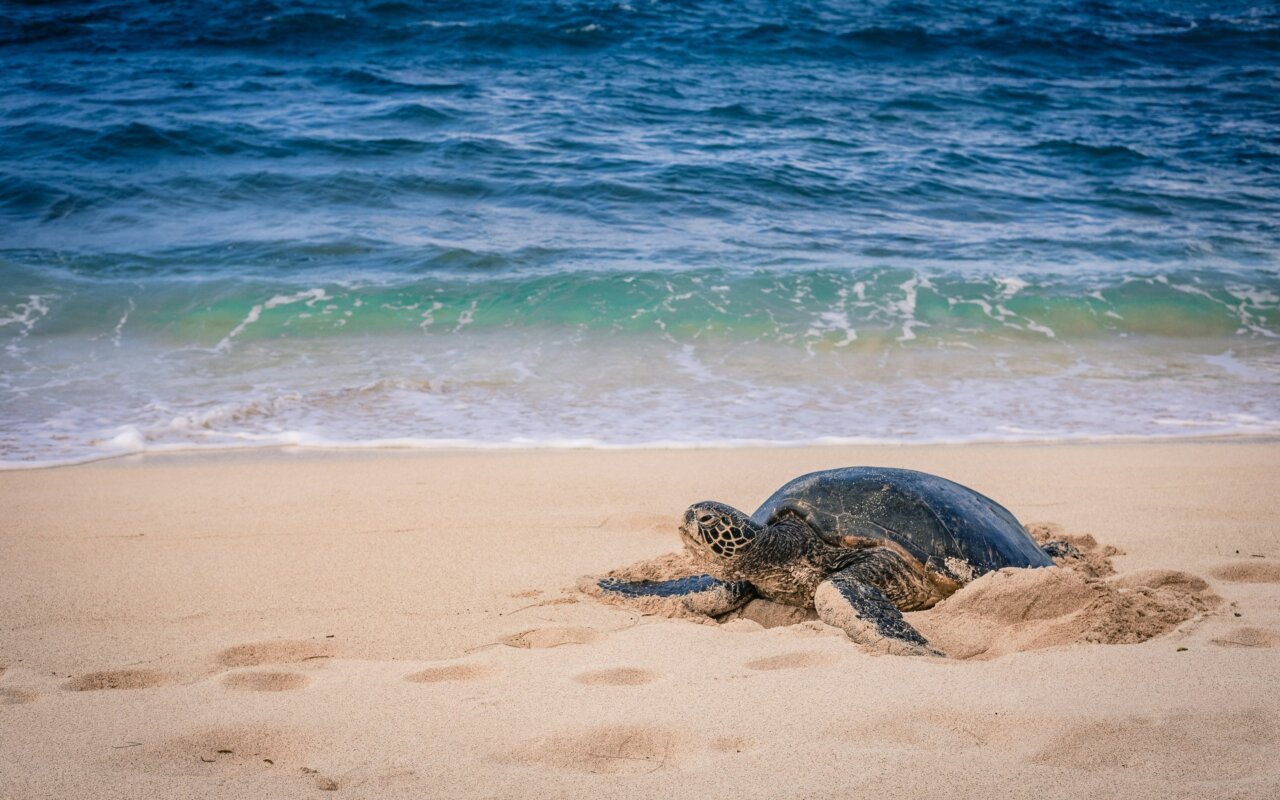
Its reputation rests on sea turtles. The beach is one of Guatemala’s main nesting sites, and conservation groups here have protected eggs and released hatchlings since the 1970s, which is the main reason many travellers come.
A turtle coast and a working village
Monterrico was a fishing and salt-making village long before it was a beach escape, and that working life still sets the rhythm away from the hotels. The turning point was conservation: the surrounding wetlands were protected as the Biotopo Monterrico-Hawaii, managed by the University of San Carlos, making this one of the country’s first coastal reserves.
The turtles are the reason. Locals call the olive ridley the parlama; it nests here alongside the giant leatherback (baule). Because wild nests are heavily poached for eggs, the hatcheries work on a trade: collectors bring in a share of each clutch, and the eggs are reburied safely until they hatch. The evening releases, when visitors line up to set hatchlings toward the surf, fund the programme.

What to do in Monterrico
- Sea turtles: visit a tortugario and, in season, join an evening hatchling release. Olive ridley and leatherback are the main nesters, peaking in the rainy months.
- Mangrove boat tour: an early-morning lancha through the canals of the reserve for herons, egrets and caimans.
- The beach: wide and dramatic, good for walking and sunsets, but read the safety note below.
Is it safe to swim in Monterrico?
Swim with great caution, or not at all. Monterrico has powerful currents and a steep shore break that pull swimmers out. Stay close to shore, never swim alone or after drinking, keep children at the edge, and ask locally about conditions. The beach is better for walking and watching the surf than for swimming.
Monterrico beyond the weekend crowd
At weekends the capital descends on the main beach. A little timing and movement finds the quieter coast:
- Come midweek, when the village empties and the hatcheries and mangroves are calm.
- Take the dawn mangrove tour rather than the mid-morning one, for active wildlife and still water.
- Walk east to Hawaii village, a smaller settlement with its own turtle project and almost no crowds.
- Buy fish off the boats and eat where the fishermen do, away from the beach-club prices.
Where Monterrico fits in a trip
Monterrico is the decompression stop: a few flat, slow days by the sea after the altitude of the highlands or the heat of Tikal. Its closeness to Antigua makes it an easy add-on at the start or end of a trip. It appears in our itineraries that build in beach time:
- Family tour: the essentials with a coastal finish.
- Nature immersion: pairs the turtles and mangroves with the rest.
For more on the country’s turtle conservation, see our article on the sea turtles of Guatemala, and all our regions of Guatemala.
How to get to Monterrico
| From | Distance | Time | Notes |
|---|---|---|---|
| Antigua | ~110 km | 2 h 30 to 3 h | Direct shuttles at weekends |
| Guatemala City | ~125 km | 2 h 30 to 3 h | Via Taxisco and La Avellana |
| La Avellana | ~5 km | 20 min by boat | Ferry across the mangrove canal to the village |
The final approach is a short boat across the mangrove from La Avellana.
FAQ: Monterrico
What is Monterrico known for?
Its black volcanic sand beach and its sea turtles. The beach is a nesting ground for several species, and local hatcheries run evening hatchling releases. Behind it, a mangrove reserve shelters abundant birdlife.
Can you swim at Monterrico?
With great caution. The beach has strong currents and a steep shore break that are dangerous for swimmers, with drownings most years. Stay near shore, never swim alone, and ask locally; the beach suits walking better than swimming.
When can you see turtles in Monterrico?
Nesting and hatchling releases peak during the rainy season, roughly June to November, though hatcheries operate more widely. Olive ridley (parlama) and leatherback are the main species.
Why is the sand black at Monterrico?
It is volcanic sand, washed down to the Pacific from the Sierra Madre volcanoes. It absorbs heat and can get very hot underfoot at midday.
How do you get to Monterrico from Antigua?
By shuttle or car, about 2 h 30 to 3 h, ending with a short boat crossing from La Avellana through the mangroves to the village.
How many days do you need in Monterrico?
One or two nights are enough for the beach, a mangrove tour and a turtle release. It works well as a short add-on to Antigua at the start or end of a trip.
Last updated: October 2026
About the author
Fernanda Ríos is co-founder of Terra Guatemala, a local travel agency based in Antigua. She adds the Pacific coast and its turtle hatcheries to itineraries for travellers who want beach time.
Sources
- Biotopo Monterrico-Hawaii / CECON-USAC
- INGUAT, Instituto Guatemalteco de Turismo
- Field observations, Terra Guatemala, 2026